FUNDRAISING FOR BIBLE MINISTRY AND ITS SPIRITUALITY

Fundraising for Bible ministry is not merely an exercise in securing resources; it is a sacred task rooted in the mission of God. At its heart, it is about enabling the Word of God to reach lives, communities, and nations that hunger for the Scriptures. Beyond financial strategies and campaign models, there lies a deeper spiritual dimension: the recognition that God is the ultimate provider and that human beings are invited to participate as faithful stewards in God’s mission.
This article explores the spirituality of fundraising for Bible ministry, examining its biblical foundations, the role of stewardship, the call to partnership, and the transformative power it has for both givers and receivers.
- The Biblical Foundation of Fundraising
Fundraising is not a modern invention but has deep roots in Scripture. In the Old Testament, God often called His people to give freely and generously for the work of His kingdom. For example, when Moses called the Israelites to contribute toward the building of the tabernacle (Exodus 35:20–29), the people brought their offerings so abundantly that Moses eventually had to restrain them from giving more. Their generosity was an act of worship, expressing their gratitude to God for His deliverance and covenant love.
Similarly, in the New Testament, Paul encouraged the early churches to give for the needs of others. His appeal to the Corinthians to contribute for the church in Jerusalem (2 Corinthians 8–9) reveals important principles: giving is an act of grace, generosity reflects God’s abundance, and cheerful giving glorifies God. Fundraising, therefore, is not about asking money but about inviting God’s people into the joy of participating in God’s mission.
In the context of Bible ministry, these principles remain relevant. When we call upon Christians to support the translation, printing, distribution, and engagement of the Scriptures, we are standing in the biblical tradition of inviting God’s people to invest in something eternal, which is the Word that gives life.
- Fundraising as a Spiritual Discipline
Henri J. M. Nouwen, in his classic work The Spirituality of Fundraising, (Upper Room Books, 2011) reminds us that fundraising is first and foremost a form of ministry. It is not a strategy for sustaining institutions but a way of proclaiming vision and inviting others to be part of God’s work. This perspective, certainly transforms how we approach fundraising.
For those engaged in Bible ministry, fundraising is more than preparing proposals or asking for donations; it is an act of faith and prayer. It begins with listening to God, seeking God’s guidance for the mission and trusting God’s provision. The fundraiser becomes a spiritual leader, inviting others into the story of what God is doing through God’s Word.
This spiritual discipline has two dimensions: dependence on God and openness to others. Dependence on God means acknowledging that every resource belongs to God and that God alone moves hearts to give. Openness to others means respecting donors as partners in ministry, not as mere financiers. We approach them with humility and transparency, offering them the opportunity to experience the joy of generosity.
- Stewardship and Responsibility
A central theme in the spirituality of fundraising is stewardship. All that we have -time, talents, and treasures comes from God. As stewards, we are called to manage these resources faithfully for God’s purposes. This includes the stewardship of the Bible itself, ensuring that it reaches people in their heart languages, relevant to their cultures, and life situations.
For all the Bible societies, churches, and Christian organizations engaged in Scripture ministry, fundraising must always be tied to accountability and integrity. Donors are giving to the mission of God. Therefore, how funds are used becomes a matter of spiritual responsibility. Transparent reporting, wise management, and ethical practices are not merely organizational requirements; they are spiritual commitments that honor God and build trust.
Stewardship also calls for creativity. Fundraising for Bible ministry should explore diverse avenues: individual donations, church partnerships, institutional grants, digital campaigns, and legacy giving. Yet, regardless of the method, the focus remains the same: stewarding resources to ensure that the Word of God continues to transform lives.
- Partnership in Mission
Fundraising for Bible ministry is not a one-sided appeal for resources but a mutual partnership in God’s mission. The Apostle Paul often spoke of the believers as “partners” in God’s ministry (Philippians 1:5). This partnership was not only financial but also spiritual, as donors shared in the blessings and fruits of the mission.
When Bible societies or ministries approach individuals and churches for support, they are essentially saying: Come and join us in bringing God’s Word to those who long for it. Donors, in turn, are given the privilege of being part of God’s mission without leaving their homes or workplaces. Their giving becomes a way of extending the kingdom of God into places they may never personally visit.
Such partnership also requires nurturing. Donors must be cared for through prayer, communication, and genuine relationships. When organizations only see donors as “sources of funds,” they reduce the relationship to a transaction. But when they see them as co-workers in Christ, fundraising becomes a ministry of encouragement, thanksgiving, and mutual growth.
- The Transformative Power of Generosity
Fundraising for Bible ministry is not just about meeting needs; it is also about transforming lives, both those who give and those who receive.
For the recipients, access to the Bible in their own language is life-changing. It brings hope, guidance, comfort, and transformation. Countless testimonies affirm how the Scriptures lead people to faith in Christ, sustain them in suffering, and inspire them toward community renewal. Behind every Bible distributed stands a donor whose generosity made it possible.
For the donors, generosity also has a spiritual impact. Jesus said, “It is more blessed to give than to receive” (Acts 20:35). By giving, Christians grow in trust, detachment from material possessions, and joy in participating in God’s mission. They learn that true wealth lies not in accumulation but in sharing. In this sense, fundraising is an invitation to spiritual growth, for the giver as much as for the receiver.
- Challenges and Opportunities
Fundraising for Bible ministry is not without challenges. In many contexts, financial constraints, donor fatigue, and competing priorities can make it difficult to sustain support. Additionally, economic crises or cultural shifts may affect giving patterns.
Yet these challenges can become opportunities for deeper faith. Scarcity can lead to greater dependence on God and innovation in methods. It can also encourage the global body of Christ to practice solidarity, with those in resource-rich contexts supporting those in need. Moreover, new technologies, such as online giving platforms and digital storytelling, provide fresh avenues to connect donors with the impact of their giving.
The key lies in keeping the focus on mission and spirituality. Fundraising must never become detached from the vision of Scripture engagement and transformation. When the appeal is grounded in God’s Word and mission, it resonates more deeply than any technical strategy.
- A Holy Calling
Fundraising for Bible ministry is ultimately a holy calling. It is about aligning human resources with God’s purposes, inviting others into the joy of generosity, and ensuring that God’s Word continues to reach the ends of the earth. Its spirituality lies in its reliance on God, its emphasis on stewardship, its fostering of partnership, and its transformative impact on givers and receivers alike.
In a world where many see fundraising merely as a business transaction, the Bible ministry offers a different vision – fundraising as ministry, fundraising as proclamation, fundraising as worship. As churches, Bible societies, and individuals engage in this sacred task, may they always remember the words of the Psalmist: “The earth is the Lord’s, and everything in it” (Psalm 24:1). All resources belong to God, and when offered back to God, they become instruments of God’s kingdom, carrying God’s Word to every tribe, tongue, and nation. In a nutshell, fundraising for the Bible cause serves as a vital instrument in fulfilling the mission of “God’s Word for God’s World.”
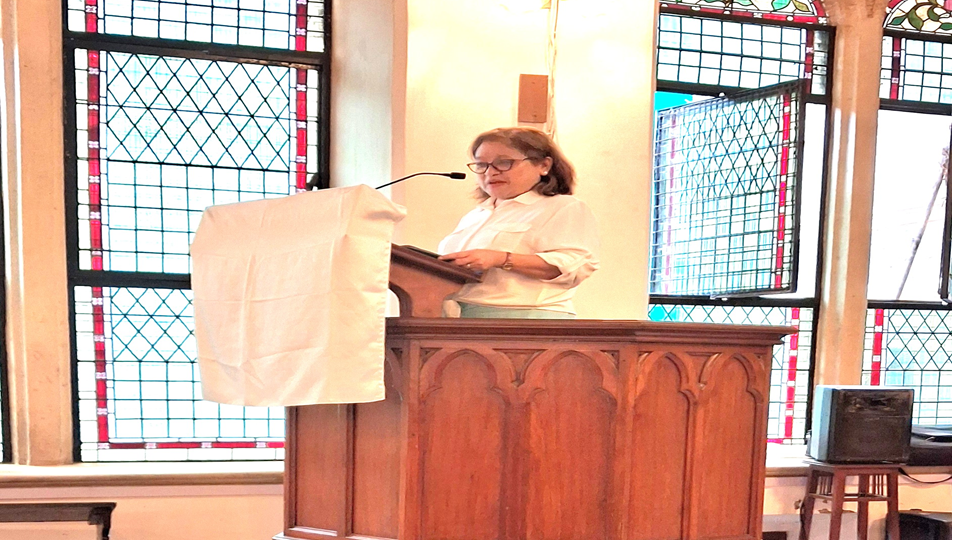
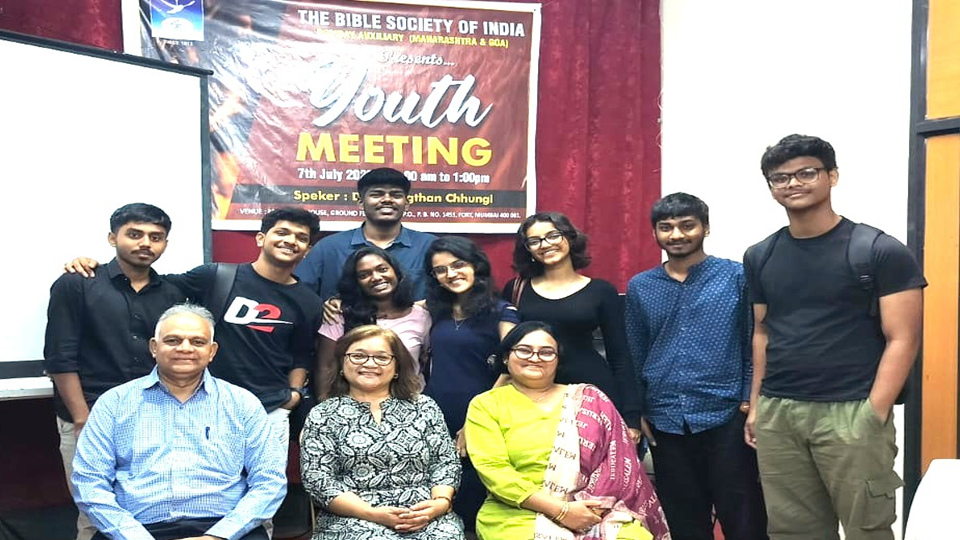
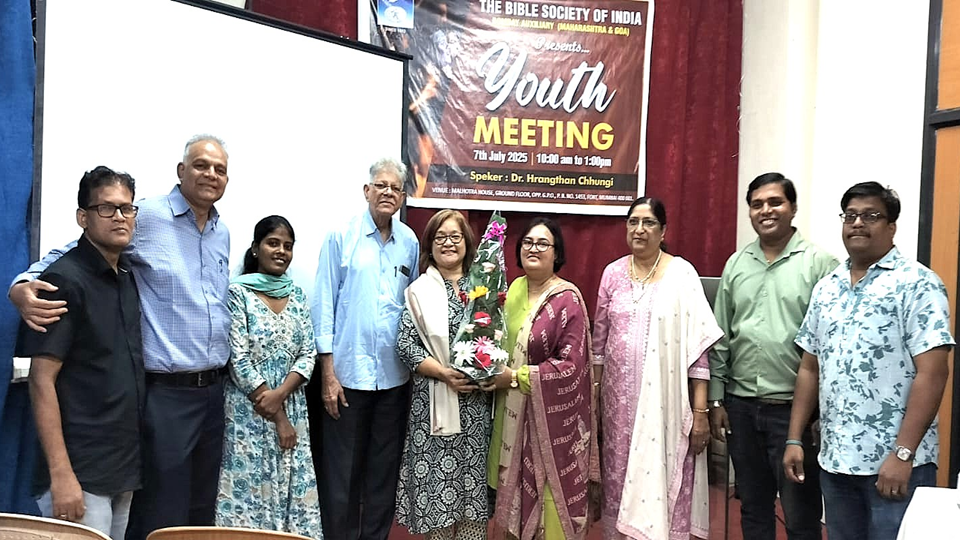
 By Dr. Hrangthan Chhungi
A/D Church, Public Relations and Resource Mobilisation
KERALA AUXILIARY
Rev. Jacob Antony Koodathinkal, Auxiliary Secretary
NEW BRANCH FORMATION
BSI Pallippadu Branch
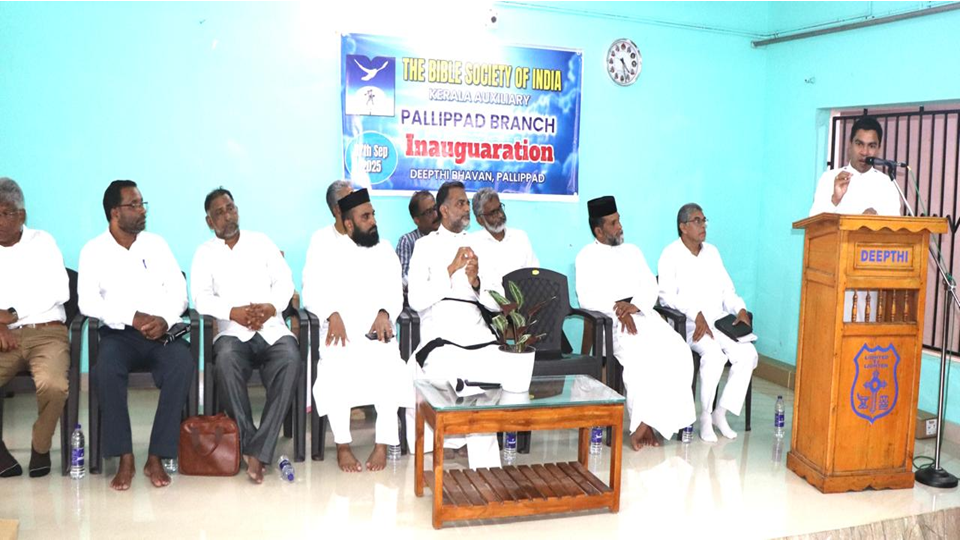
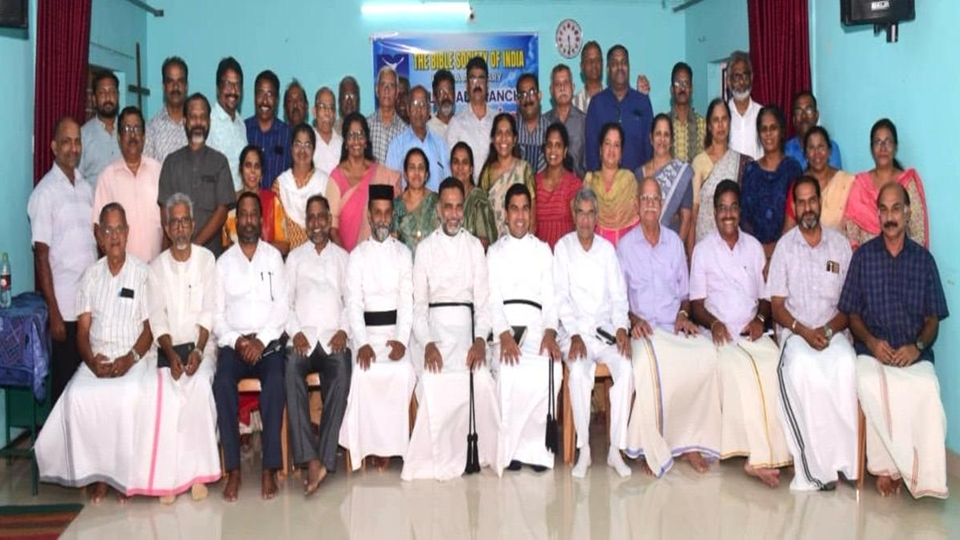
We are delighted to announce the formation of the Pallippadu Branch, the 156th branch under the Kerala Auxiliary of the Bible Society of India. The inaugural meeting was held on 17th September 2025 at Dheepthi Bhavan, Pallippadu. The meeting was presided over by Rev. Jacob Thomas and the branch was formally inaugurated by the Auxiliary Secretary.
The occasion was graced by Very Rev. George Panakkamattom Cor-Episcopa, clergy, pastors, and other dignitaries who offered their greetings. Members from various churches, donors, and representatives from nearby branches also attended the event.
During the meeting, the office bearers and committee members were duly elected as follows: President: Rev. Jacob Thomas, Secretary: Mr. Sajan Chacko, Treasurer: Mr. Nibu K. Varghese.
BSI Chalissery Branch
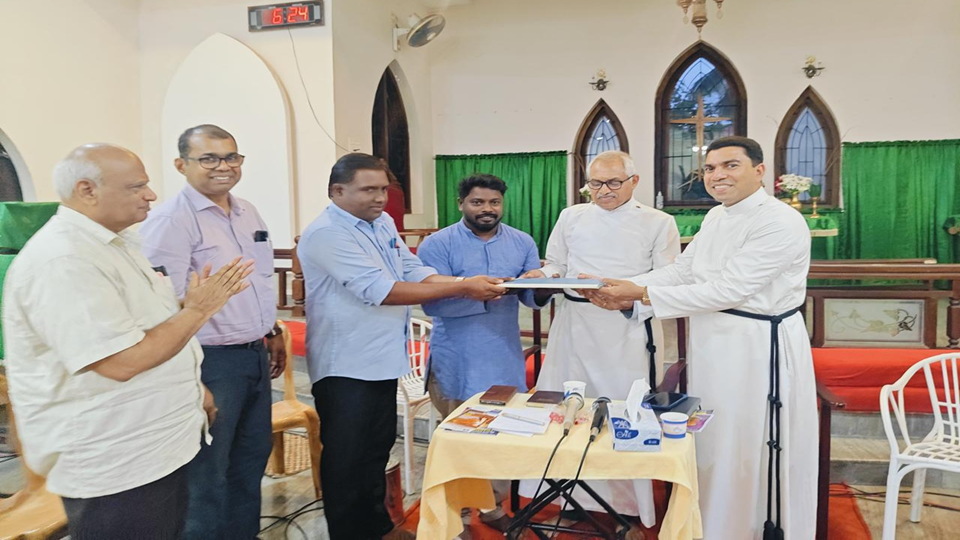
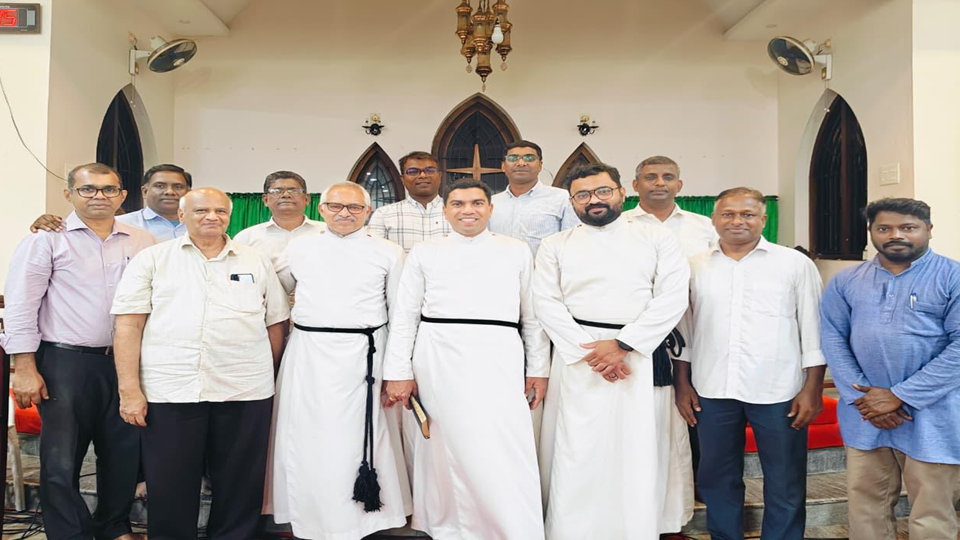
We are pleased to announce the formation of the Chalissery Branch, the 157th branch under the Kerala Auxiliary of the Bible Society of India. The inaugural meeting was held on 4th October 2025 at 5:00 p.m. in St. Luke’s CSI Church, Chalissery. The meeting was presided over by Rev. K. C. John, Vicar of the church, and the branch was inaugurated by the Auxiliary Secretary.
The event was blessed with the presence and greetings of clergy, pastors, and other dignitaries. The office bearers and committee members were elected as follows: President: Rev. K. C. John, CSI, Secretary: Evg. Wilson N. J., Mar Thoma, Treasurer: Pr. Sunil, IPC, Area Coordinator: Mr. Jose Francis.
BSI KERALA YOUTH CONFERENCE 2025
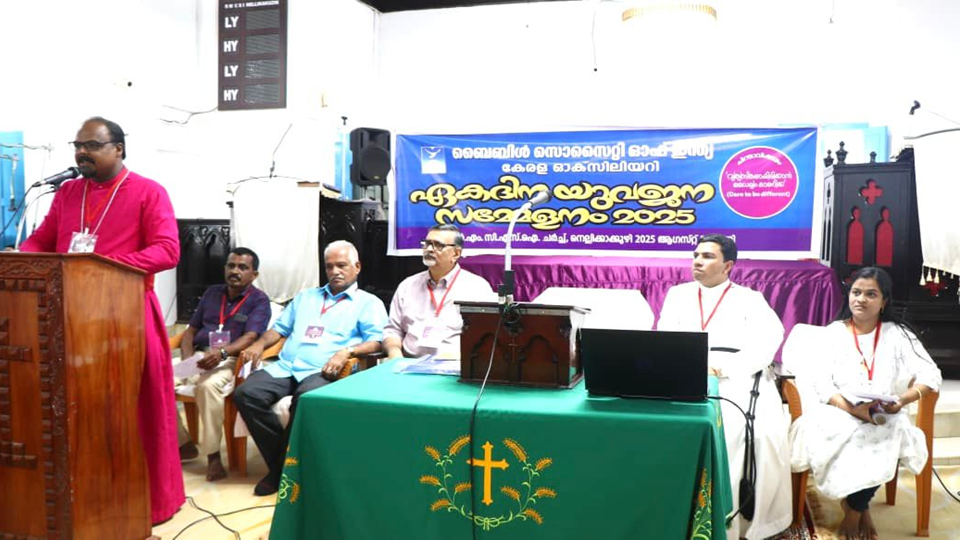
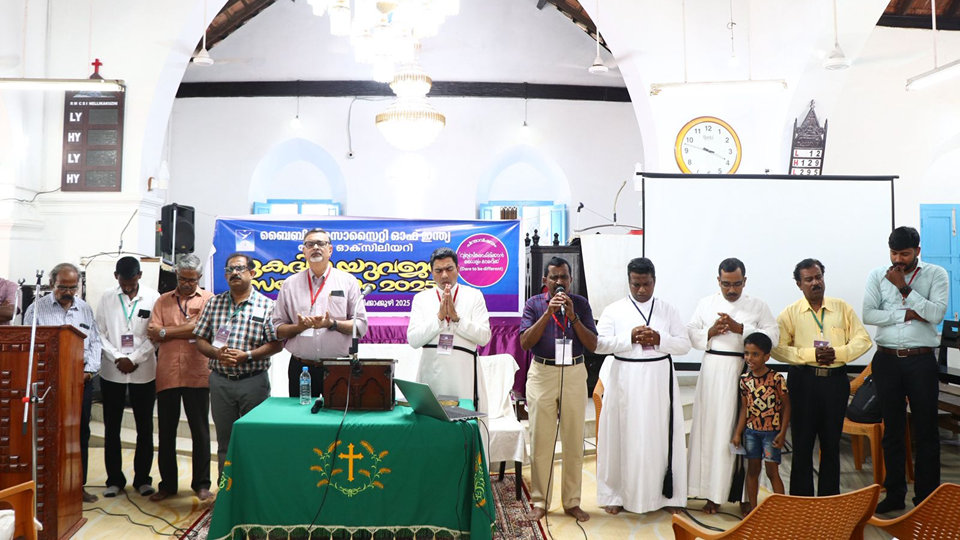
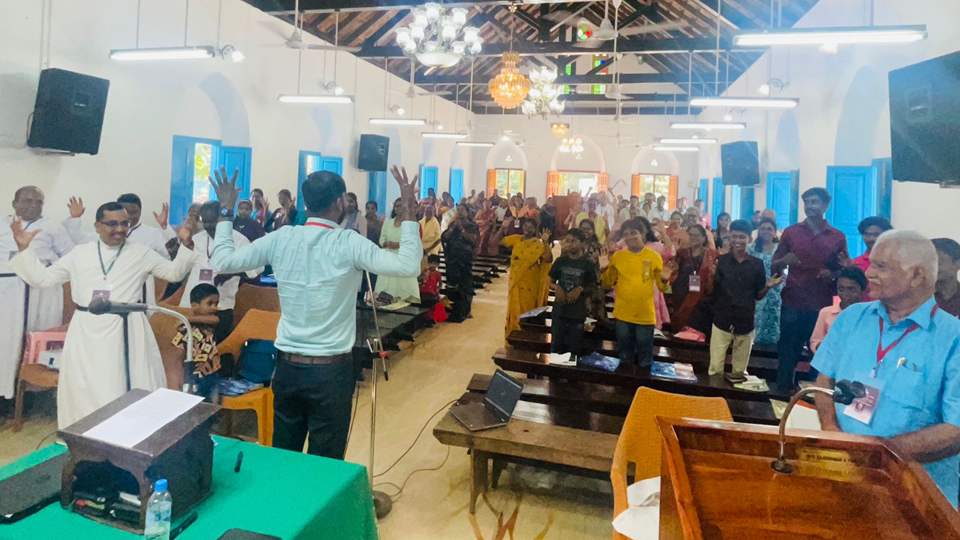
The Bible Society of India, Kerala Auxiliary, organized a One-Day Youth Conference on 23rd August 2025 at CSI Church, Nellikakuzhy, Thiruvananthapuram, under the theme “Dare to be Different.” The conference was inaugurated by Rt. Rev. Dr. Selvadas Pramod, Bishop and President of the Bible Faith Mission, who in his keynote address based on Ecclesiastes 11:6 urged young people to live courageously, stand firm in faith, and sow the seeds of God’s Word in their daily lives. Dr. Sabu T. Thomas, Auxiliary Treasurer, delivered the thematic presentation, while Dr. Vijeesh Vijayan, Chev. Dr. Koshy M. George, and Rev. Jacob Antony Koodathinkal led insightful sessions blending biblical teaching with practical guidance. Greetings and encouragement were shared by Rev. K. P. Mohandas, Rev. Dr. Vincent, Mr. Santosh Kumar, and Mrs. Babita Santhosh.
Over 150 youth participated in this vibrant gathering of worship, learning, and fellowship. The Thiruvananthapuram South Region Youth Choir enriched the event with uplifting songs. The Kerala Auxiliary expressed deep gratitude to the Thiruvananthapuram South Region leaders, especially Mr. Santosh Kumar, Mrs. Babita Santosh, and their team, for hosting the conference with dedication and warmth. The event reaffirmed the Bible Society’s mission to make God’s Word available, accessible, and relevant, inspiring the next generation to lead with faith and purpose.
SYSTEMATIC BIBLE READING
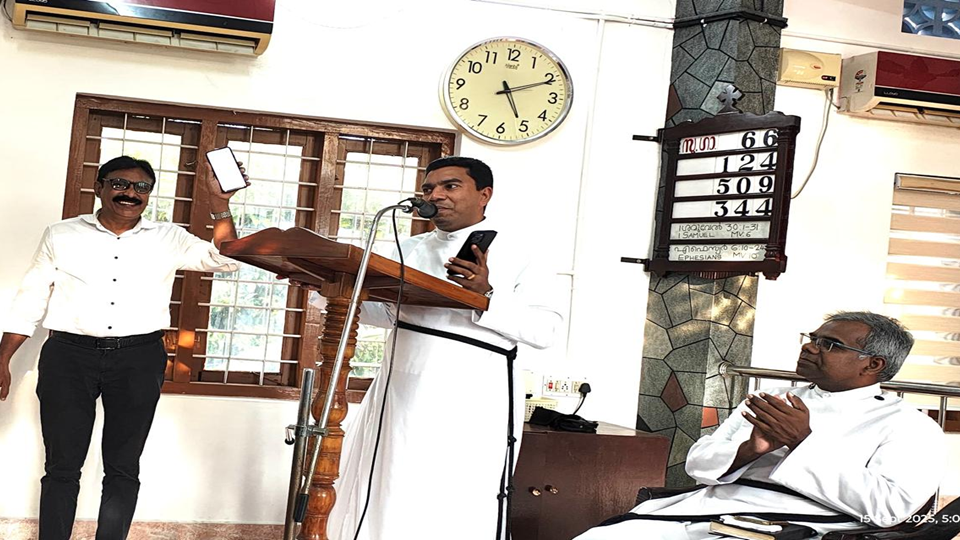
“Read the Bible Systematically – A Journey Through God’s Word!”
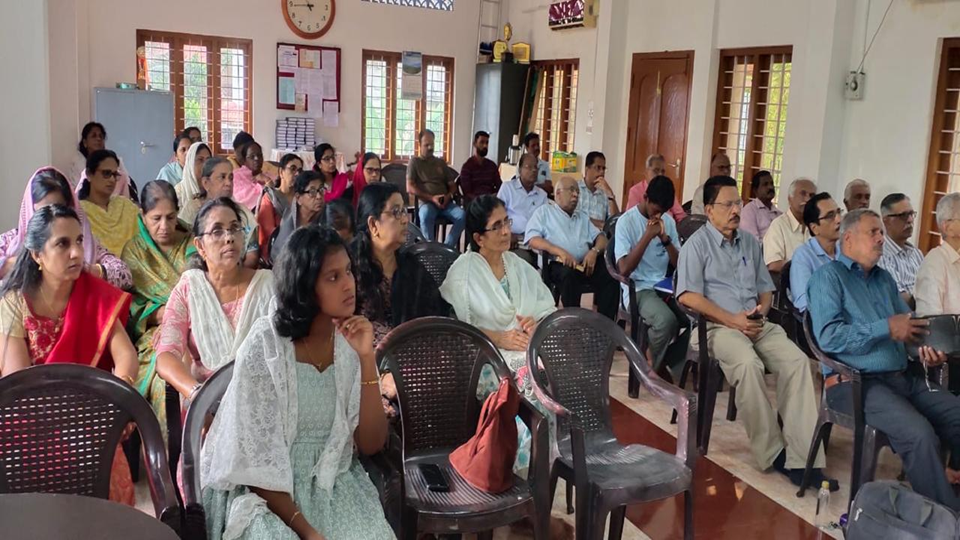
As part of the 70th Jubilee Projects of the Kerala Auxiliary, the Kottayam Town Branch launched its inspiring Bible Reading Program, the seventh of ten special initiatives, emphasizing systematic Bible reading. The inaugural meeting was held on 15th September 2025 at St. Thomas Evangelical Church, Kottayam, under the leadership of Rev. Joji Oommen Philip, Branch President. Rev. Basil George delivered the keynote message, and Dr. Sabu T. Thomas, Auxiliary Treasurer, graced the occasion. Rev. Jacob Antony Koodathinkal, Auxiliary Secretary, formally released the Bible Reading Chart, designed to guide participants in completing the entire Bible within seven months.
The Bible Reading Journey began on 17th September 2025, supported by the Online Bible Class, inviting all to engage in reading God’s Word prayerfully and consistently. Heartfelt thanks to Mr. Jacob P. Cherian, Branch Secretary, and the dedicated branch team for their sincere efforts in making the event impactful.
“Let God’s Word shape your world – read it, live it, share it!”“Have you ever read the Bible fully systematic way!!! Here is an opportunity for all of you!!!” – a great initiative by our Kottayam Town Branch.