1940s: United Bible Societies is founded to strengthen Bible Society work around the world

In May 1946, less than a year after the most destructive global conflict in human history, representatives from Bible Societies in 13 countries gathered at the Elfinsward Conference Centre in Haywards Heath, England. Convinced more than ever of the “need of the world for the Word of God”, the delegates set in motion the formation of a truly global Bible fellowship—the United Bible Societies.

The attendees—each with their own traumas from war—were determined to work together, “so that at this time of need, the fullest effort may be made in co-operation with other Bible Societies to meet the need and seize the opportunity to supply to the stricken world the Word of Life and Strength.”

The start of global collaboration

From the establishment of the first Bible Society in 1804, activities flourished and, by the end of the 19th century, a network of agencies and associations were endeavouring to put the Bible into people’s hands and hearts around the world. However, this work was often conducted and directed by individual Bible Societies.

The 1930s saw the greatest move towards collaboration. The Netherlands Bible Society, using the occasion of its 125th anniversary, invited several Bible Societies to discuss global cooperation at a conference in July 1939.

“The hour has struck for co-operation”, exhorted John Mott of the American Bible Society. “We should only impoverish ourselves by standing alone.”

Global events, however, meant that this fresh spirit of collaboration would go no further. Five days after the conclusion of the conference, 1.5 million German troops marched into Poland and the Second World War became inevitable.

Throughout the war, news came of determined distribution and production. Bible Societies encountered huge challenges as conflict impacted printing and distribution, as well as the funding that made this possible, but some Bible Societies were able to supply Bibles and portions even amidst the chaos of war.

Rev. Dr. Hanns Lilje, who later represented Germany at Elfinsward, was imprisoned in Nuremberg. Kept in solitary confinement, even his Bible was taken from him, but he knew the Scriptures well enough to find comfort in God’s Word. “We were strengthened by the thought that the Word of God is not bound”, he reflected. “We know that there is one light and one hope—the Word of God which will continue to lead us through the future.”

A new beginning, together

Bible Societies’ war-time experiences had only strengthened the resolve to work together. Following the cessation of hostilities, Bible Societies gathered together at Elfinsward. From the global ruins and a world in transition, there was hope about what could be achieved in faithful service to God, but a realism of the scale of the challenges that lay ahead. Challenges that would be best faced by working together.

“There is not much hope in the world”, noted Bishop Eivind Berggrav from Norway, who spent much of the war in solitary confinement, “but there is very much hope in the Bible.”
 

Looking forward

75 years later, people around the world’s need for the Bible continues to be served by the shared pursuit of a shared mission—a mission built on the legacy of faithfulness, sacrifice and collaboration. From the initial 13 countries gathered at Elfinsward, now around 150 Bible Societies work in more than 240 countries and territories to make the life-giving words of the Bible available to everyone.

“Our point of view is global and that is the point of view of the Bible”, remarked Bishop Eivvind Berggrav at the meeting at Elfinsward. “We stand before an open door.”

It is that global open door that has guided the mission and vision of Bible Societies working together as a United Bible Societies Fellowship for the last 75 years.

Source: United Bible Societies

Read more

TEXTS: Genesis 1:1 and Psalm 104: 24

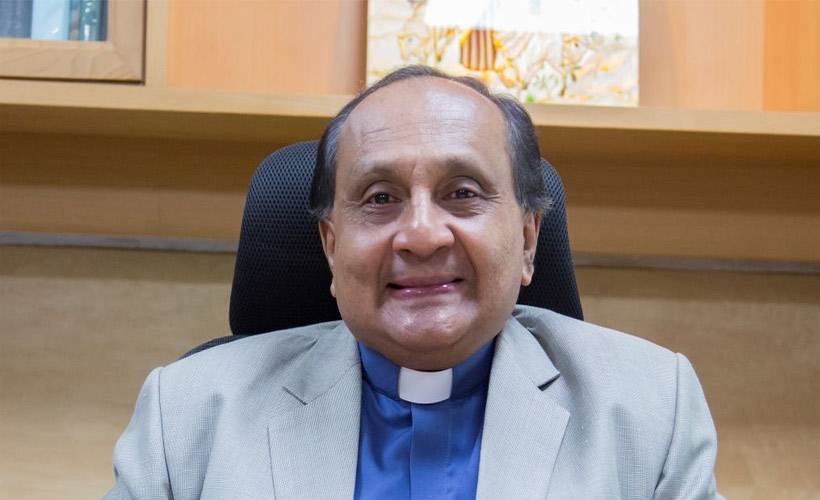
Rev. Dr. M. Mani Chacko,
General Secretary, BSI

BIODIVERSITY
BIBLICAL VISION FOR THE POST COVID WORLD

Recently two episodes in the TV caught my attention. One was about the cruelty of the humans against animals – giving a pregnant elephant fruits filled with firecrackers to eat, which led to the death of the elephant. The humans fearing that the elephant would destroy their crops, fruits and vegetables committed this atrocious act. It was heart rending to see the dead pregnant elephant being drawn from the waters and taken to the hospital for postmortem.

The other episode which I enjoyed seeing on the TV was the relationship between a two year old girl and an elephant, how she plays with the elephant and vice versa; how the little girl commands the elephant to do certain acts and the elephant implicitly obeys the little girl’s orders; how the little girl goes on a safari on the elephant and many other acts of warmth and friendship.

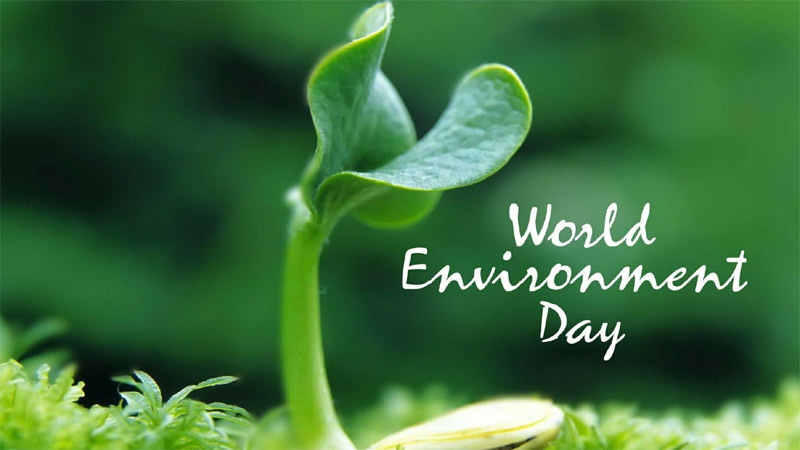
The above two episodes made me to think of the theme BIODIVERSITY: BIBLICAL VISION FOR THE POST COVID WORLD. BIODIVERSITY was theme chosen for the World Environment Day, which was celebrated on the 5th June 2020. The theme was a call to action to combat the accelerating species loss and degradation of the natural world. One million plant and animal species risk extinction, largely due to human activities. According to the World Wide Fund for Nature (WWF), Humanity has wiped out 60% of mammals, birds, fish and reptiles since 1970. Some recent analysis has revealed that humankind has destroyed 83% of all mammals and half of plants since the dawn of civilization. In a country like India, with world’s second highest population and an increased demand for economic growth coupled with rapid urbanization trend, the process of biodiversity loss is on a fast track, resulting in increased frequency of extreme weather events, successive droughts, lack of drinking water, crop failures etc. This has severe impact on the poor and the agrarian communities, whose life and livelihood depends on nature and biodiversity.

Time has come for the humanity to focus on nature. The world has come to a stand still due to the COVID-19 pandemic. At this time of lockdown measures, the world witnessed a significant reduction in green house emissions around the world and the nature found its “ breathing space”. In a way, nature reclaimed its space! But for how long will it be? How will post COVID-19 world look like? All is not lost and it is not too late. We can reverse the trend of biodiversity loss by reimagining our relationship with nature and acting now to increase ambition and accountability for its protection. But we the stakeholders have to respond collectively. What is our role in preserving nature as a faith community, the Church and as a fellowship, the United Bible Societies?

It is here the Word of God throws some light and guidance. In Genesis 1:1, it reads, “In the beginning, God created the heavens and the earth”. The Hebrew word for “created” is bara and this verb is only use of God’s activity. The other word in Hebrew indicating the act of making/ creating is asah. This verb is also used of God making the sun, moon and the stars, land creatures etc. in the creation story itself. However, the use of the word bara as used in Genesis 1:1, a verb used only of God creating the heavens and the earth assumes significance. The verb asah is the verb also used to refer to the human making certain things. Although the verb asah is used in the Creation story to indicate God’s involvement in creation, the biblical writer puts things in proper perspective by using the word bara first and then asah. The writer is making it clear that the entire Creation is God’s. That is the reason the writer uses the Hebrew verb bara first and then only asah. The writer wants to communicate very clearly that God is the owner of the Created world with all its diverse creation- the land, the sky, the sea, the animals, the birds, the fish, the humans and the list goes on. Creation is an act of God whereby diverse species of life were brought into existence on the planet earth to display God’s glory, majesty and power and also to communicate God, the Creator’s desire is that different species should live harmoniously in an interconnected manner on this earth, sustaining one another, providing and caring for each other, instead of being a threat to each other. Creation is an act whereby God brought things into order and placed them in their proper places with proper functions. The intention of the Creator God, the God of the Bible is that the entire Creation of God, the diverse species should display the glory of God. But when the created order is disturbed by selfish interests in the name of development, the bio diversity gets affected and thus the species become a threat to each other and become extinct one by one. The present COVID -19 pandemic crisis we face is to be seen as a disturbance of the created order of God the Creator. Whether the virus emerged in the lab or in the bird market or from pigs, the fact is, the created order is shaken and the created order is moving into the path of oblivion. Thus biodiversity becomes a challenge!

God Godself creating the world raises the question “Why”? God did not have to create. God could have remained alone in all power and glory. But God did not choose to remain alone but God created the heavens and the earth. Why? The biblical writer points out a few pertinent facts:

1.God is not a myth but God IS. One does not need any scientific proof to argue and prove whether there is God and whether God exists? The very creation in all its rich diversity is the natural proof for the existence of God. It is the natural revelation that God exists and that God IS.

2.Humans are Stewards of God’s Creation in its entirety, both the human and the non-human are part of God’s creation. Human are only a part of God’s creation. It is not that humans alone are created by God and not the other species. No. God created different species with life so that life is visible on earth exhibited by all species of the created order. Human’s responsibility is to care for the creation of God, not to disturb or destroy it. The Hebrew verb radah meaning “dominion” as used in the creation story does not mean “ dominate”, implying the human can do anything he/she likes to do with the other species, the land and the sea but to be responsible stewards, taking care of the whole created order.

3.Bio diversity is God’s design for the Created order and it is to be maintained that way, allowing space for all species, not just the human species, but all – the plants, the birds, the animals the fish, the air, water to exercise its assigned functions in the assigned timings and in the assigned manner, living their life which God has endowed them with in full.

4.God’s creation displays God’s glory, not only that God IS but also that God is a God of power, glory and majesty and God desires God’s creation to acknowledge the same with awe and wonder.

God’s creation is not only “good” but “very good”. At the end of each creation, God would look at the creation and say “good” (tov). But at the end of all creation including that of the human creation, God looked at the entire creation and said not just “good” but” very good” (“tovmeod”).

The Psalmist, in line with the Genesis account of Creation meditates on the God’s work in creation. As he thinks about all what God has made, the Psalmist becomes aware that he has only scratched the surface of what God has done. He throws up his hands in despair about the impossibility of describing it all, and simply exclaims “O LORD, how manifold are your works! In wisdom have you made them all; the earth is full of your creatures” (Psalm 104:24). Contemplating the marvels of God’s creation reminds the Psalmist of how little he comprehends of the greatness and wisdom of the Creator. He also marvels at how the Lord sustains every creature God has made, on land or in the sea, by providing each of them with the type of food they need, when it is needed. (104:27-28). The Psalmist also realizes that the Creators’ best gift is life itself. God has given it to all God’s creatures, and it is good and to be enjoyed. But God the Creator is sovereign over life and has the right to give it or to take it. If God choses to turn from God’s creatures, they are terrified, and if God choses to remove their breath and take their life, they return to the dust from which God created them(104:29).When God choses to do so, God sends God’s Spirit to create more life to replenish the earth.(104:30).

The Psalmist concludes by declaring his ardent desire that the glory of the LORD will never cease to be revealed in the natural world and by praying that God the Creator will remain joyful over God’s creation (104:31). These words strike home to us. In an era of pandemic, pollution, environmental degradation and extinctions caused by human sin and greed, can we still see enough of the natural world to catch a glimpse of God’s glory revealed in it? Can God the Creator still rejoice in it? If we are God’s servants, we will work to preserve God’s Creation to let God’s glory shine forth to all

The Psalmist declares that his desire is to live in gratitude to the good Creator who has gifted him with life and with all that is needed to sustain life (104:33-34). He prays that the meditation in this psalm, and all his subsequent meditations on the Lord, will be pleasing to the Lord, the Creator, thus bringing joy to the Creator. The wicked, those who refuse to acknowledge the good Creator and the Creator’s provision, stifle the joy of life by their rejection of God and refusal to acknowledge God’s glory. They bring suffering rather than joy to God’s Creation. That is why the Psalmist prays that they may vanish from the earth (104:35a). But the Psalmist does not want to finish on such a negative note. So, he returns to the words which he began the meditation with and calls on his whole being to praise the LORD, the good Creator. (104:35b).


Conclusion:

There is an interesting imaginary film entitled “The Chairy Tale”. The film is about the story of a chair. The chair is in a very small room with one small window for ventilation. The owner of the room comes into the room with a big book in his hands, wanting to finish reading the book in quiet as he had to return the book back to the library the next day. So, he says to himself, “if I go to the small room, there is also a chair and if I need some rest while reading, I can make use of the chair”. He also says to himself “no one visits the room because it is small and also dark without much light and air and therefore, he can finish reading the book without any external disturbance”. In the film, we see him walking up and down the room deeply engrossed in reading the book. After a few hours, he feels tired walking back and forth and so he says to himself” Why should I be so tired? There is the chair, which I made employing a carpenter with my own money for my own comfort. So, I will go and sit on the chair and finish reading the book after taking some rest”. In the film, we see him going towards the chair with this arrogant attitude and is about to sit down. Then the chair, full of dust, a tool, which has been, made for a purpose, which was not looked after for months together, starts drifting away from the man, the owner!So, the man says to himself again “with my money, I made this chair for my comfort and so the chair has to be under by beck and call. Hence I will somehow sit on the chair and take rest”. With this arrogant attitude again, he goes to the chair, this time with a little fear as to whether the chair will drift away from him again and if so whether he will fall down? So he goes to the chair, with his eyes deeply fixed on the pages of the book, without taking time to even look at the chair, attempts to sit on the chair. But this time also, the chair drifts away from him! He goes after the chair and the chair drifts away from him. This action of going after the chair and the chair drifting away from the man continues for some time. Then the man says to himself “Hell with the chair!If the chair, which I made for my own comfort, will not obey my command, I will go and sit on the floor in the corner of the room, take some rest and finish reading the book. He goes to the corner, takes rest and finishes reading the book. He gets up and looks at the chair with great anger, again saying to himself, “This chair is for my comfort. It should serve the purpose for which it was made “. So he keeps the book on the floor and goes to the chair to sit on the chair to show to the chair that he is the owner of the chair and the chair should simply obey his command. This time also he had some fear whether the previous experience would be repeated? But this time, there was no book in his hand. He looks at the chair, smiles at the chair, takes a cloth and dusts off all the dust which was accumulated on the chair because there was no one to keep the chair clean. He again smiles at the chair. The Chair too smiles at him. The man, although with fear goes to the chair looking at the chair, smiling at the chair and was about to sit on the chair. This time, the chair did not run away from him! Rather, the chair remained in its place and allowed the man to sit on the chair, exercising its assigned function. Then the caption comes on the film “The man and the chair lived happily thereafter”!

The variety of life on Earth, its biological diversity is commonly referred to as biodiversity. The number of species of plants, animals, and microorganisms, the enormous diversity of genes in these species, the different eco systems on planet, such as deserts, rain forests and coral reefs are all part of a biologically diverse Earth. Appropriate conservation and sustainable development strategies attempt to recognize this as being integral to any approach to preserving biodiversity. Almost all cultures have their roots in our biological diversity in some way or form. Declining biodiversity is therefore a concern.

During these critical moments we are going through due to the pandemic, let us recall afresh again that God is the Creator and that God has created different species to see them live on the land and the sea and that it is our duty to preserve the diverse forms of life on this planet earth. Bio diversity is the Creator’s design for the Created Order. It is indeed the biblical vision for the post COVID World.

Let us together with the Psalmist and say with one accord “Bless the LORD, O my soul! O LORD my God, you are very great!

Glory be to the Father, the Son and the Holy Spirit. Amen.


Read more

Luke 12: 26-28

26 If then you are not able to do as small a thing as that, why are you anxious about the rest?
27 Consider the lilies, how they grow: they neither toil nor spin,[a] yet I tell you, even Solomon in all his glory was not arrayed like one of these.
28 But if God so clothes the grass, which is alive in the field today, and tomorrow is thrown into the oven, how much more will he clothe you, O you of little faith! (ESV).

Greetings to you all in the name of our God, creator of the world and all that is in it; the flora and the fauna, the living and non-living things, the giant animals and birds with the tiniest ones, the creepers and the crawlers, the microbes and the atoms!


When I saw this beautiful wild lilies radiantly blooming in such an open and unprotected place, must be by the roadside, beside the pipeline! It reminds me of this biblical passage as quoted above. And my thought wanders around, and looking at myself and my fellow human beings who are struggling, if not physically but mentally fighting against Covid19 Pandemic, which is causing havoc to our lives. Our pain and our struggles are real. Our cry and the loss of our dear and loved ones are real. Our trauma is real.

In the midst of uncertainty encircling around us … the whispering of God came so loud to my heart through these beautiful and fragile lilies, saying “Why worry, my child! look at these tiny, fragile yet beautiful lilies, blooming with magnificent colours. It is me who creates and clothes them; they just bloom when their time comes even just for a day yet they reveal the glory of God!”

“My child, you are created by me with love and care, do not worry, leave all your burdens on me, I will carry you through; have faith in me and take courage; you are more precious than these lilies; I clothe you with home to shelter you from storm, heat, cold; I care for you like a mother eagle, spreading my wings to carry you and catch you when you are falling; do not be afraid nothing exists without any purpose as God holds the universe, even the Covid19. Be still and know that I am God.”

Some health experts and even health ministers of some state governments have indicated that Covid-19 has now entered the community transmission stage in India. At this stage, authorities don’t know about the source of infection for patients. The virus becomes part of large social circles. At this juncture, we feel that we are like the wild lilies, so vulnerable and so fragile. But let’s remember that we need to come to terms with this virus, by not taking it lightly but with much care as per medical guidelines and government instructions. Let’s adopt our new life style while relying and trusting on the promises of God. God cares for us, as much as the wild lilies and even much more than that. In the midst of our sorrows, loss and cry, God is holding our hands saying, “Be still and know that I am God, I am with you”.

May the Peace of God be upon us, especially to those who suffer the pain of loss, sickness and death. Amen.

Dr. Hrangthan Chhungi,
Director
Church Relations & Resource Mobilisation Department

Read more

Celebration of the World Environment Day on June 5, 2020

Dr. Hrangthan Chhungi, Director, Church Relations and Resource Mobilisation Department,
prepared the Order of Service for the World Environment Day. The same was followed by all our Auxiliaries, Shillong Translations Centre and our Associate Auxiliary at Andaman and Nicobar Islands.

Rev. Dr. M. Mani Chacko, General Secretary, gave a short reflection on Genesis: 1:1; Psalms 104:1, 10-30. He emphasised that God, the Creator of all things, rules over all, and deserves our worship and adoration. The earth, and with it, all the cosmos, reveals its Creator’s wisdom and goodness and sustained and governed by God’s power and lovingkindness. We were created in the image of God and given a privilege to exercise stewardship over the earth by learning to co-exist with interdependence.

We had all revisited the “Garden of Orchard”: Staff represented the characters in the Garden of Orchard rejoicing with one another’s company was the highlight of the service. The water, soil, fruit, green grass and rock were represented to acknowledge our interdependency as God’s creations. Observance of World Environment Day was a good reminder of our responsibility to be good stewards of what God graciously entrusted to us as found in the Scripture.

Read more

Appointment

The BSI Central Council resolved to upgrade the Sales Depot in Andaman and Nicobar Islands as Associate Auxiliary Status. Actions were initiated accordingly and Dn. Ranjit Paswan was appointed as Associate Auxiliary Secretary. He was inducted to the office on July 1st, 2020 at 10.00 am.

Read more

Announcement

FORMATION OF THE 17TH AUXILIARY OF THE BIBLE SOCIETY OF INDIA

On July 1, 2020, our dear General Secretary, Rev. Dr. M. Mani Chacko had announced a blessed news in the history of the Bible Society of India. The announcement is quoted in length as follows:

“I am very happy to announce on behalf of the President of BSI, Most Rev. Dr. P. C. Singh, Vice President, Dr. Leela Bose, Treasurer, Rev. Premkumar Soans and the Executive Committee of BSI that the 17th Auxiliary of the Bible Society of India came into existence today (July 1, 2020) with the official announcement of the resolution of the Executive Committee and the Induction of Dn.Ranjit Paswan of the Believers Eastern Church as the new Associate Auxiliary Secretary of the Associate Auxiliary of BSI. Andaman and Nicobar Islands by the General Secretary, BSI as per the instructions from the President, BSI. The function was attended by the members of the newly formed Associate Auxiliary Committee chaired by the Vice President in the absence of the President, the Bishop of Nicobar. This is God’s doing and fulfillment of the long-cherished dream of the people of ANI. Let us pray that God would bless the newly formed Associate Auxiliary and the Associate Auxiliary Secretary for the cause of God’s Word in the Islands. I would like to thank Mr. Sajal Kumar Sarkar, the Senior Auxiliary Secretary, Calcutta Auxiliary for the sincere and efficient supervisory role he played over the years of the work of BSI through the Sales Depot in ANI. I also thank Mr. Shaji John for his very committed and able work in ANI thus far. He was able to build an excellent rapport with all churches in the Islands over the years and now with the appointment of Dn. Ranjit Paswan as the Associate Auxiliary Secretary, I am sure both of them will take the Associate Auxiliary forward for the glory of God. God is faithful and great indeed is His faithfulness!

Warm Regards,
Rev. Dr. M. Mani Chacko
General Secretary,
The Bible Society of India

Read more

Prayer for Protection

“Save me, O God, for the waters have come up to my neck. I sink in the miry depths, where there is no foothold. I have come into the deep waters; the floods engulf me. I am worn out calling for help; my throat is parched. My eyes fail, looking for my God.”

Psalm 69:1-3 (NIV)

1. Pray for the work of the Bible Society of India, General Secretary, the office bearers, executive members, 17 Auxiliaries, Shillong Translations Centre all the branches, donors, volunteers and the prayer partners.

The following Auxiliaries are catering to the Scriptural needs of the following areas:

Sl.No AUXILIARIES AREAS
01 Aizawl Mizoram, Tripura and parts of Assam
02 Allahabad Uttarakhand & Uttar Pradesh
03 Andhra Pradesh Andhra Pradesh
04 Bombay Maharashtra & Goa
05 Calcutta West Bengal
06 Dimapur Nagaland, Manipur and parts of Assam
07 Gujarat Gujarat
08 Jabalpur Madhya Pradesh
09 Karnataka Karnataka
10 Kerala Kerala and Lakshadweep
11 North West India Delhi, Chandigarh, Punjab, Jammu and Kashmir, Ladakh, Haryana, Rajasthan,
12 Odisha Odisha
13 Ranchi Bihar and Jharkhand
14 Shillong Meghalaya and some parts of Assam
15 Tamil Nadu Tamil Nadu and Puducherry
16 Telangana Telangana
17 Andaman & Nicobar Islands Andaman & Nicobar Islands


2. Pray for the United Bible Societies that is operating from different parts of the world. May God continue to sustain their works to bring good news to all who are in need of inner peace in the midst of Covid19 Pandemic crises.

3. Pray for the World at large, for people who are feeling low, traumatised and who are struggling to process the situation that the World finds itself into.

Read more

We look into God’s Word for reassurance

We look into God’s Word for reassurance, hope and peace in this increasingly uncertain times at the ongoing spread of coronavirus.
It reinforces the work of the Bible Society of India: making the Bible available, affordable and accessible

“Have I not commanded you? Be strong and courageous. Do not be frightened, and do not be dismayed, for the Lord your God is with you wherever you go.”
Joshua 1:9

Read more

RECOVERING THE POWER OF LAMENT IN THE CONTEXT OF COVID 19

Lamentation, a prayer for help coming out of pain, is very common in the Bible.
Over one third (50 or so) of the psalms are laments. One classic example of a Lament is

Awake! Why are you asleep, O Lord?
Arise! Cast us not off forever!
Why do you hide your face,
forgetting our woe and our oppression?
For our souls are bowed down to the dust,
our bodies are pressed to the earth. (Psalm 44:24-26)

How long, O Lord? Will you utterly forget me?
How long will you hide your face from me?
How long shall I harbor sorrow in my soul,
grief in my heart day after day?
How long will my enemy triumph over me? (Psalm 13:2-3)

Lament frequently occurs in the Book of Job: “Why did I not perish at birth, come forth from the womb and expire?” (Job 3:11). The prophets likewise cry out to God, such as Jeremiah does: “Why is my pain continuous, my wound incurable…?” (15:18) and Habakkuk: “…my legs tremble beneath me. I await the day of distress that will come upon the people who attack us” (3:16).

One whole book, Lamentations, expresses the confusion and suffering felt after the destruction of Jerusalem by the Babylonians.

We find something similar in the New Testament as well. People who are afflicted cry out to Jesus for help. Bartimaeus, the blind beggar, shouts out, “Jesus, Son of David, have pity on me!” (Mark 10:47).

Jesus himself laments to the Father in the Garden of Gethsemane, “Abba, Father, all things are possible to you. Take this cup away from me…” (Mark 14:36). In his agony on the cross, Jesus makes his own the words of Psalm 22, “My God, my God, why have you forsaken me…?”

Despite its wide-ranging presence in the Bible, we have by and large lost touch with this dimension of prayer. It is something we need to recover. First, we feel, “My God, my God, why have you forsaken me?” and we might think, “I should not feel this way! I am losing my faith!” Lament corrects a false, naïve and overly rationalistic view of faith.

In the Scriptures, faith is not simply an intellectual assent to some statement about God. It is the trusting of our entire selves to God. At times, we do experience God’s absence; we do feel alone and confused, and we doubt. Doubt is not opposed to faith; despair is. We see this in the case of the father who brought his son to Jesus for healing. When Jesus encouraged the father to have faith, he replied, “I do believe, help my unbelief!” (Mark 9:24).

Even Saint Paul tells us he was “perplexed, but not driven to despair” (2 Corinthians 4:8). In despair we give up on our relationship with God. Doubt, on the other hand, is a sign that our faith is alive and kicking; it is part of the rhythm of faith itself.

Lament is not a failure of faith, but an act of faith. We cry out directly to God because deep down we know that our relationship with God counts; it counts to us and it counts to God.

Even if we do not experience the closeness, we believe that God does care. Even if God seems not to hear, we believe that God is always within shouting distance. In the Scriptures, God does not say, “Do not fear, I will take away all the pain and struggle.” Rather, we hear, “You have no need to fear, since I am with you” (e.g., to Isaac, frightened of the Philistine king—Genesis 26:24; to the anxious Moses being sent to confront Pharaoh—Exodus 3:11-12; to the disciples when they see Jesus walking on the sea—Matthew 14:27) and together we will make it.

We will survive, yes, even death itself. In the present context of the Pandemic, our security can be shaken, and our faith as well. Perhaps it is not lamenting, but the failure to lament that expresses a lack of faith.

Secondly, in lamenting we cry to God, “Why, O Lord?” Our suffering is so big; it does not make any sense; it lacks meaning. The desire to find meaning is a strong one.

In our search for meaning, we can be tempted to look for cheap and easy answers. Lament teaches us that there are indeed things we do not understand; in fact, we cannot understand. God does not say, “Do not fear; you will understand everything and have all the answers.” Our human mind can take us only so far. At times we can do no more than speak our confusion to God, and lament tells us that we should do no less.

Thirdly, we feel against people who hurt us, personally or as a community, “Happy the man who shall seize and smash your little ones against the rock” (Psalm 137:9), and we think, “I should not feel this way; it is against charity.”

Lament counters a false, naïve and overly romantic view of charity. Charity does not mean that everything is lovely, that we never get upset, that we sit around holding hands and saying how wonderful everything is. This is unreal.

Negativity, injustice, hatred, brokenness are part of our lives and part of our world. In the face of this, we can have an instinctive feeling for retaliation in kind, for returning hatred with hatred. I do feel pain, hurt and anger, but these are not a good basis on which to act. The fact that I feel a certain way does not give me permission to go out and dump my negativity wherever and on whomever I want. Lament suggests that it is all right to express our uncensored feelings before God. We need to accept Lament as an act of Faith. There is power in Lament and Lament brings in healing to all who are affected or infected by the present COVID 19 Pandemic. When we cry out to God or lament to God, we get the assurance that God is in control and God will take care of God’s Creation in accordance with God’s will and in God’s way and time. The Scripture Engagement Programs undertaken recently by the Bible Society of India under the supervision of the Department of Church Relations and Resource Mobilization Department are precisely attempts to bring in this unshaken truth home to the suffering people due to the Corona virus spread.

Read more